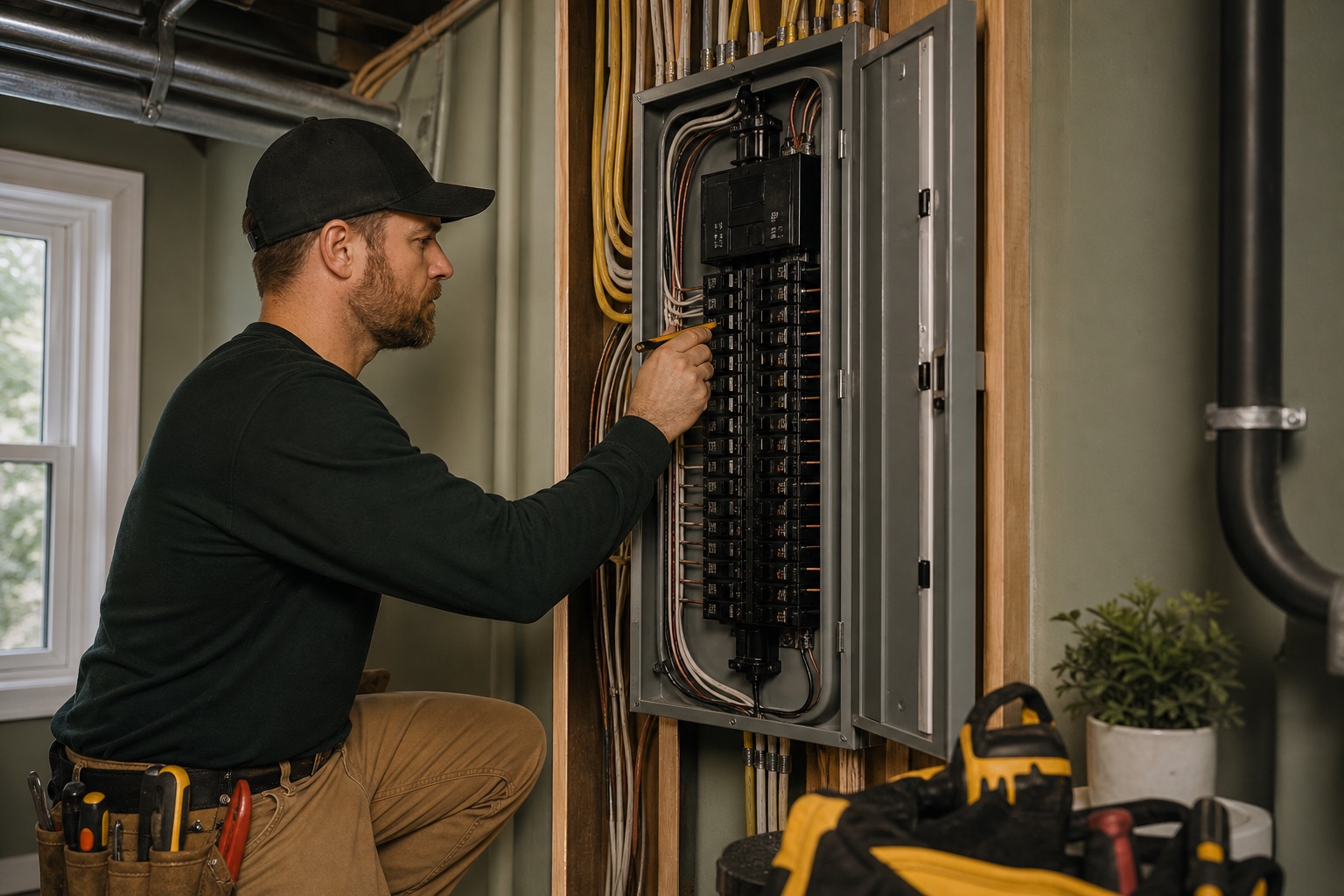
Symptom to source
We use the reported symptom to guide a focused inspection instead of replacing parts at random.
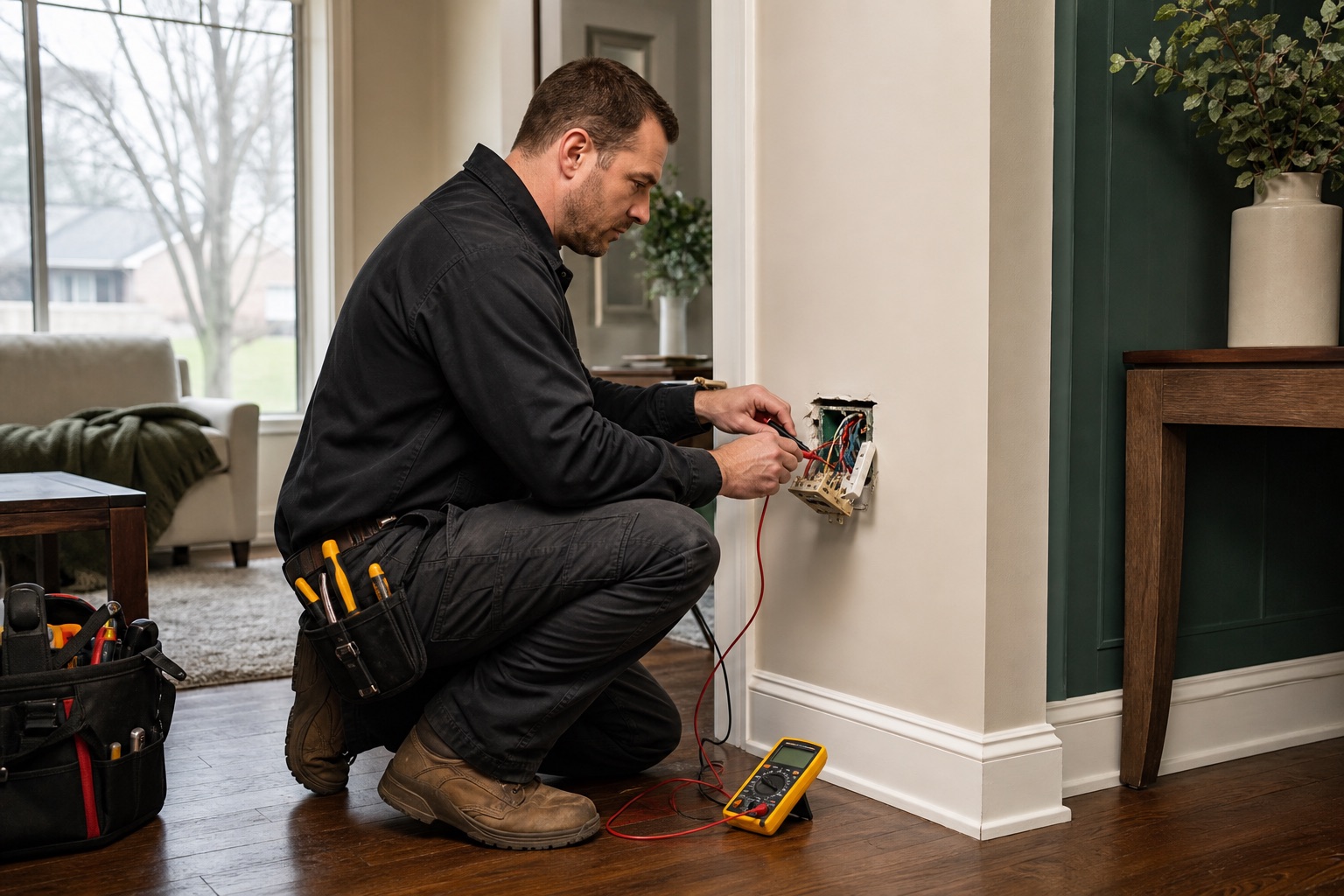
Electrical repair should start with diagnosis—not a guess. Power On Electric traces the symptom and documents the repair needed.
Electrical repair may involve a worn device, a loose connection, damaged cable, overloaded circuit, moisture exposure, or a problem further upstream. The goal is to identify the condition that explains the symptom and repair the affected portion without masking a larger issue.
Homes in the area can have multiple generations of electrical work behind the walls. That makes careful testing, accessible junctions, existing panel labeling, and a practical plan for finished surfaces especially important.
We use the reported symptom to guide a focused inspection instead of replacing parts at random.
The estimate separates included repair work from concealed conditions that cannot be confirmed until access is available.
We plan access and patching expectations before opening walls, ceilings, or boxes.
Every home is different. The estimate should identify the exact equipment, preparation, access, materials, testing, and exclusions for the project.
Discuss My ProjectGood communication is built into the work. Each phase has a clear purpose and a visible result before the next begins.
We ask what turns off, how often it happens, and whether weather, load, or a recent project changed anything.
We inspect accessible devices, verify power, and look for heat, damage, loose terminations, or other visible conditions.
The affected device or wiring is repaired or replaced as scoped, then the circuit is tested before closeout.
Not sure whether this is the right service? Send a photo and a short description, then call or request an estimate for a useful next step.
Ask about your project →These answers are written around real decision points. The exact scope still depends on the home, equipment, and conditions found at the visit.
A brief change can occur when a motor starts, but repeated or severe flicker may point to a loose connection, circuit issue, load problem, or service concern. An electrician should evaluate the pattern.
Often, yes, when the condition and access are understood. The scope should explain the access method, any patching responsibility, and whether hidden conditions could change the work.
No. It may be the device, a tripped GFCI, a breaker, a loose upstream connection, or damaged wiring. Testing helps locate the actual cause.
Tell us what is happening or what you want to add. We'll confirm the details and map the next step.