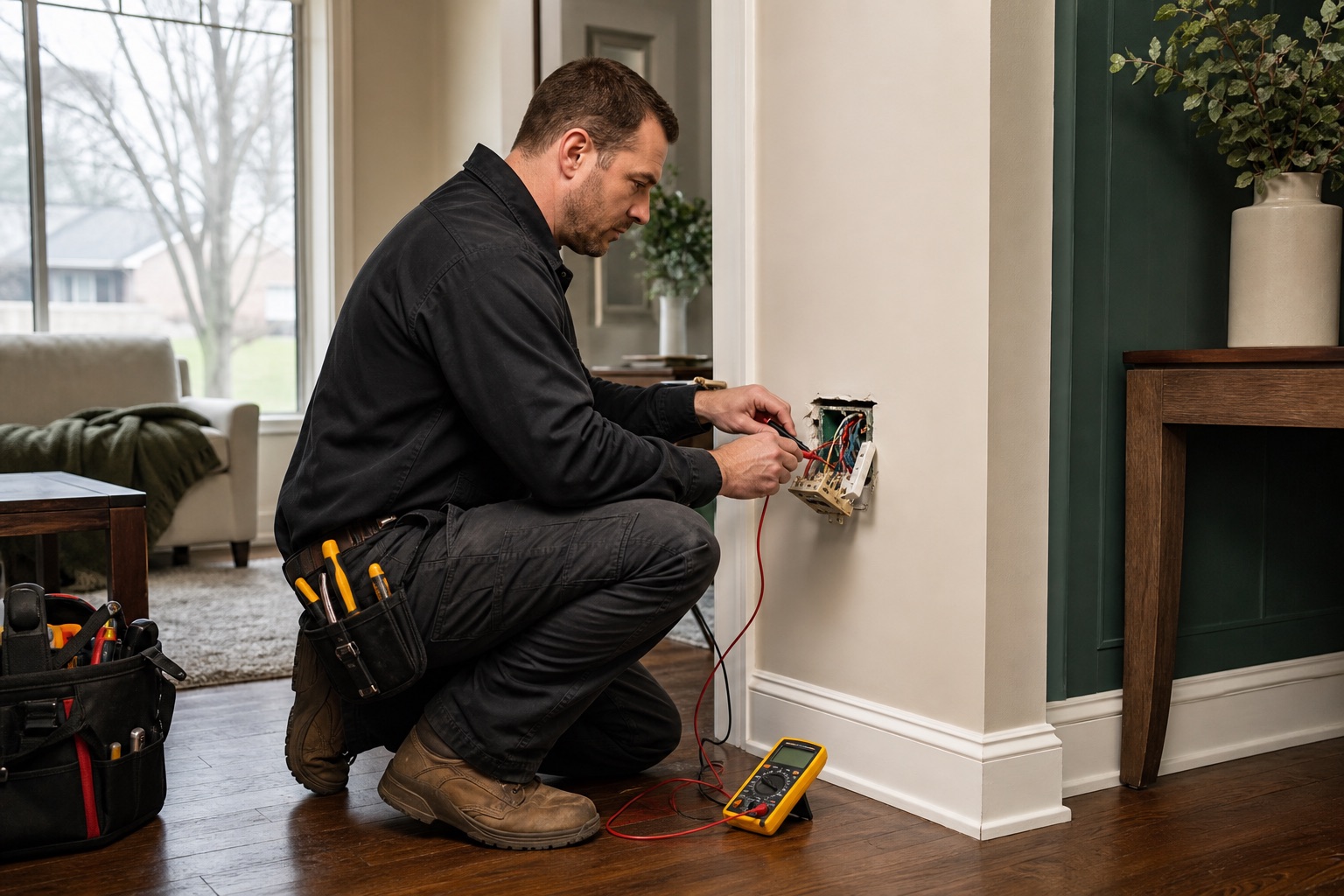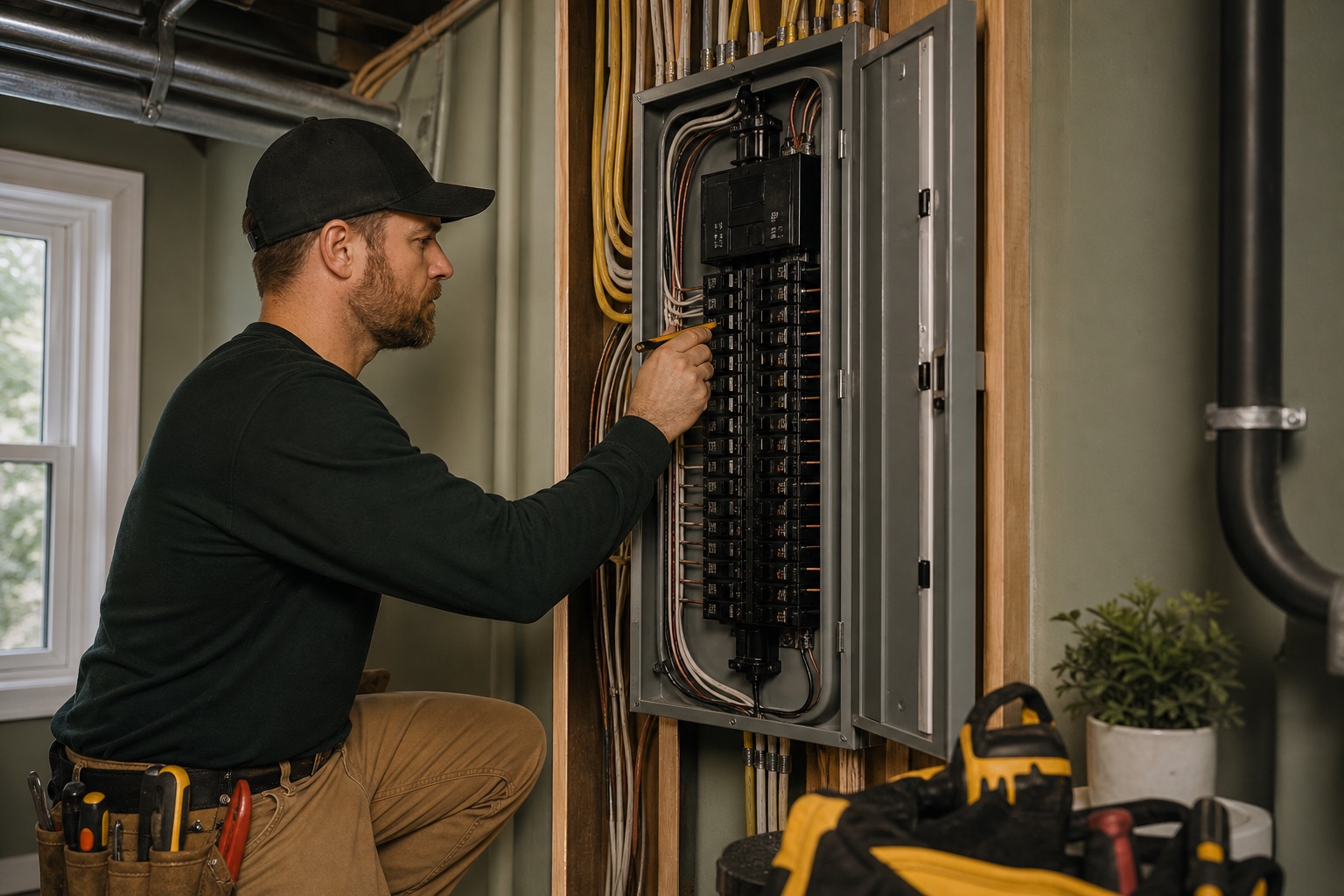
Back up the right loads
We discuss what you need during an outage so the system is planned around actual priorities.
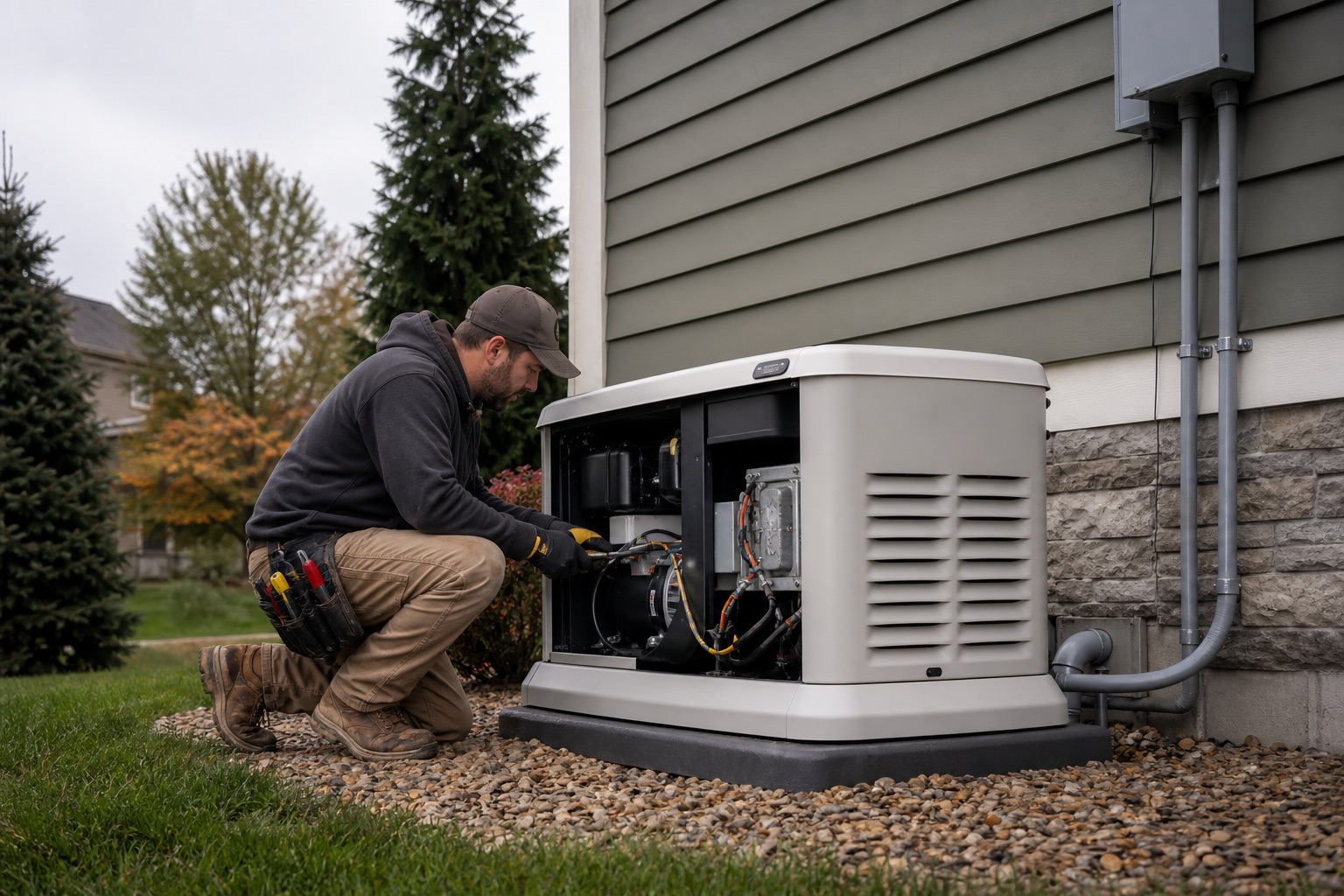
A generator installation is more than placing a unit outside. The system has to connect cleanly, transfer safely, and fit the property.
Generator installation planning includes generator type and size, placement, fuel or connection requirements, transfer equipment, service capacity, wiring routes, and the loads the homeowner wants backed up. A clear estimate explains what is included and which parts may involve a gas, concrete, utility, or generator specialist.
Snow, freeze-thaw conditions, drainage, and tight side-yard access affect generator placement in Southeast Michigan. Equipment clearance, service access, exhaust direction, and local inspection requirements need to be considered before installation begins.
We discuss what you need during an outage so the system is planned around actual priorities.
The installation plan includes how backup power is isolated from utility power and how the home will transfer.
Access, clearances, snow, drainage, neighbors, and maintenance access all belong in the site discussion.
Every home is different. The estimate should identify the exact equipment, preparation, access, materials, testing, and exclusions for the project.
Discuss My ProjectGood communication is built into the work. Each phase has a clear purpose and a visible result before the next begins.
We identify the circuits or systems that matter most and review the proposed generator and site conditions.
The estimate identifies electrical scope, access, equipment, fuel or pad coordination, permits, and any other trades.
After installation, transfer behavior and backed-up circuits are tested, then the owner receives a practical walkthrough.
Not sure whether this is the right service? Send a photo and a short description, then call or request an estimate for a useful next step.
Ask about your project →These answers are written around real decision points. The exact scope still depends on the home, equipment, and conditions found at the visit.
Power On Electric can define and complete the electrical portion of a generator project. Fuel, pad, gas, permits, and manufacturer requirements should be confirmed in the written scope and with any needed specialists.
That depends on the generator size, service, transfer equipment, and the home’s loads. Many systems prioritize selected loads rather than attempting to power everything at once.
Follow the generator manufacturer’s maintenance and exercise instructions. The owner should also know how to check status and who to call when a fault appears.
Tell us what is happening or what you want to add. We'll confirm the details and map the next step.